

A software engineering student has built a privacy-focused phone number platform that’s reached 130,000 users in just two years – after being repeatedly told his vision was “too risky” by the very companies he needed to work with.
Dany Kattouf launched Veritel while still at university, frustrated that existing privacy tools either looked untrustworthy or simply didn’t work when he tested them.
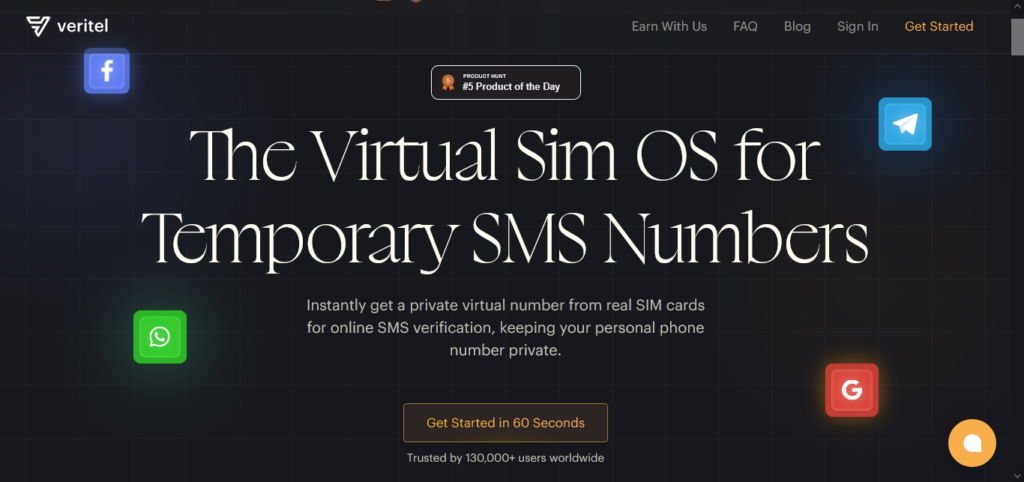
The platform provides temporary phone numbers for 15 minutes, allowing users to verify accounts without surrendering their real contact details to websites they don’t trust.
But Dany quickly discovered that building the technology was the easy part. The real challenge was convincing mobile operators to supply the phone numbers that make the service possible.
“Getting a hold of phone numbers to really tackle this problem is not easy,” Dany told Founder Insights.
“You need trust, you need numbers and you just don’t have that when you start.
“A very common pattern you see in the privacy industry is a lot of stuff is seen as high risk.
“We went to mobile operators and said, ‘We believe people deserve their privacy, and we’re going to be regulating all the numbers so they can’t be used for fraud.’
“Nine times out of ten you hear, ‘Oh, that’s a little bit too risky for us, we love the idea, but we just can’t work with you.’
“That was really the difficult part at the start.”
The relentless rejection taught Dany what would become the startup’s most valuable lesson: persistence isn’t about pushing harder, it’s about timing and trust.
“You get a lot of no’s,” he said.
“The biggest thing is persistence – realizing that no doesn’t mean stop, it just means it’s the wrong time for that person or that company.
“Not cutting ties, not getting upset, just saying, ‘Okay, I understand why you think it’s high risk,’ and then coming back later.”
As Veritel grew and built credibility, the partnerships began to follow. The platform now averages 20 percent month-on-month growth, powered almost entirely by word of mouth rather than traditional advertising.
“It’s really difficult to advertise because the person seeing your ads won’t necessarily need the number today,” Dany said.
“They might not need it for two months down the line.
“Our growth is just word of mouth – people knowing it works, telling their friends, and then everyone kind of just has Veritel on the back of their mind.”
The journey reshaped Dany’s understanding of what’s possible in technology, citing SpaceX’s rocket landings as proof that seemingly impossible ideas simply need time and determination.
“If you can think of something, you can make it,” he said.
“You asked about landing rockets 10 years ago, no one thinks that’s even possible.
“I didn’t grow up saying I wanted to build something with SMS or know how numbers work. I was just passionate about the problem.
“If it’s impossible, it’s really not – it’s just maybe the wrong time, or just give yourself a bit more time and you’ll get it done.”
That belief sustained him through a modest launch. Veritel’s first month delivered just 20 customers, a figure that could have derailed many founders in a high-volume business model, not Dany, he saw the potential and that motivated him even more.
“Previously, I wouldn’t have even thought it would get 10,000 users – I just built the product based on the solution that I really wanted to exist.”
The early days also taught Dany that perfectionism can be progress’s greatest enemy. He spent five to six months polishing the website before launch, time he now considers partially wasted.
“A big part of that was really trying to make the website as trustable and as professional as possible,” he said.
“In hindsight, people tend to care more about just the solution.
For Dany, customer satisfaction remains the measure that matters most. He actively monitors support channels, finding validation not in revenue metrics but in user feedback.
“I like to stay on the customer support side and it really makes my day when someone gets on there and says, ‘This is a great product, just wanted to let you know,'” he said.
“Money aside, if you’re not building a product that actually helps people, it doesn’t feel the same.
“I really wouldn’t be content.”
Dany’s north star remains focused on democratizing privacy tools for everyone.
“To build out the suite of privacy related tools that’s just simple and easy for people,” he said.
“A lot of people don’t realize the solution even exists, and a lot of people who just hear about it might think, ‘This seems pretty complicated.’
“It’s really all about just building a suite that’s as simple as possible – make an account, you’ve got all the tools that you could need for privacy.”
The broader ambition is to make temporary phone numbers as commonplace as VPNs, transforming them from niche tool to standard privacy protection.
“Most people don’t know about temporary numbers,” he said.
“The barrier to entry previously was just too high and there just wasn’t enough visibility.
“I just want to increase the visibility as something that’s not niche but easy and should be done.
“If you’re getting a VPN, you might as well install a tool that can give you numbers as well.”
READ MORE: ‘I earn more than £700 EVERY MONTH by transforming STREET furniture’