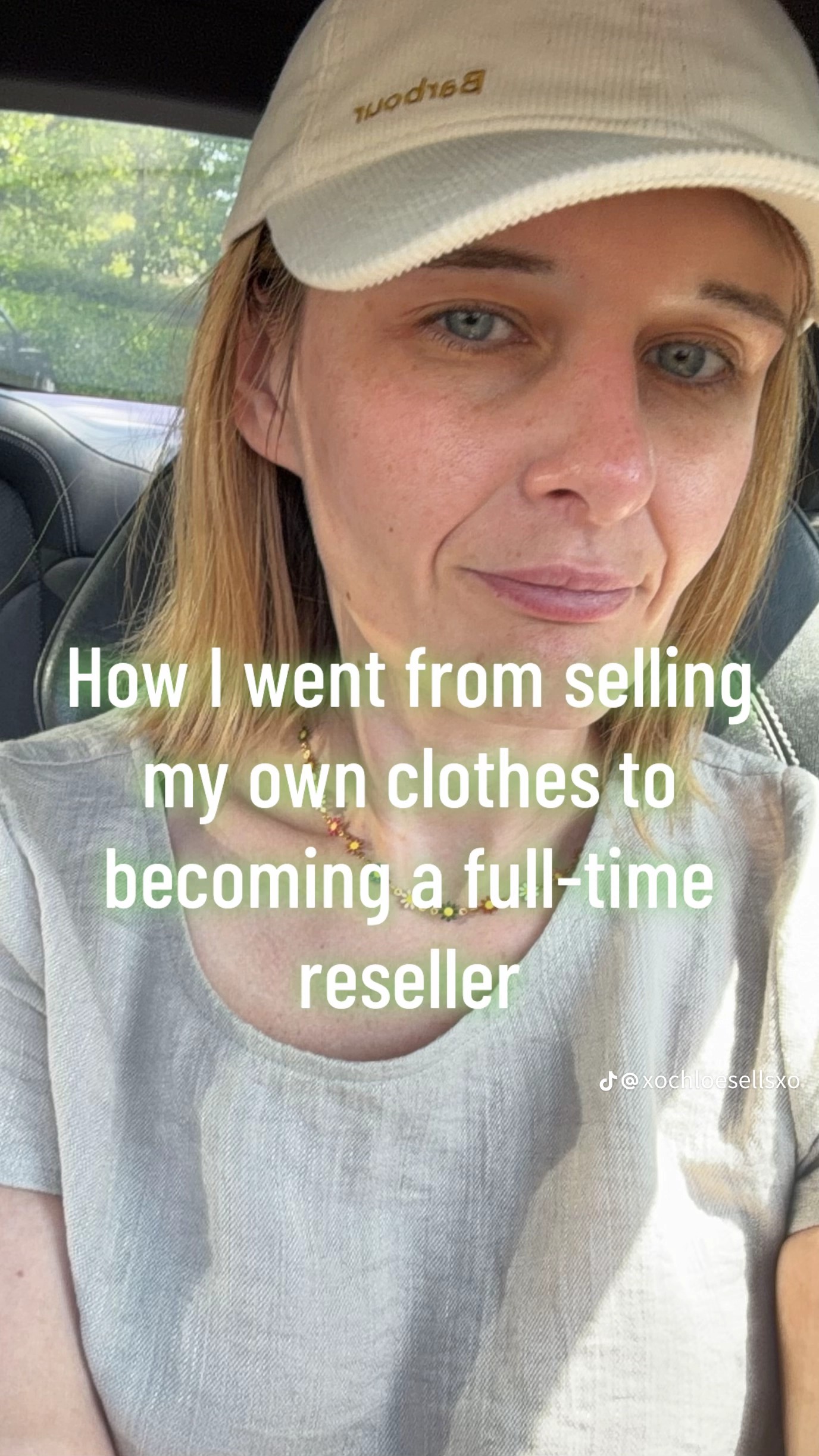
Chloe Thompson started her reselling business with £10 of charity-shop finds and a few pieces from her own wardrobe. Four months later, she left nursing to work for herself full-time.
The 32-year-old, from Torbay in Devon, now says she has around 500 active listings across Vinted and eBay and sells an average of 150 items a month. Her stock fills a room at home, and she is considering an office or warehouse as the business grows.
For founders, the revealing part of her story is the work between the first sale and the decision to leave employment: learning what to buy, how to price it and how to cope when income changes from month to month.
Starting a reselling business with £10
The idea came while Chloe was helping with her partner’s antique-dealing business. She realised she was more interested in that work than her own job as an orthopaedic nurse, but wanted to focus on clothes and bags.
“I started without really knowing what I was doing,” she told CreatorZine, in an interview supplied by Jam Press. “But I very quickly became completely hooked on it.”
She had never used Vinted before deciding to try reselling. Rather than waiting until she understood every part of the market, she began with a small amount of stock and learned through buying, photographing, listing and selling.
That modest starting point kept the initial experiment small. It also gave her something more useful than an idea alone: experience of which items buyers wanted and what it took to get them sold.
For more approaches to getting an idea off the ground with limited resources, read our guide to starting a business with little or no money.
The decision to leave nursing
Flexibility was a major motivation, but Chloe says she worked hard at the beginning to see whether the venture could support her as a full-time job. After four months, she felt confident enough to leave nursing.
“I really loved the flexibility that came with reselling and that was a huge motivation for me,” she said. “I worked very hard in the beginning because I wanted to see if I could actually make it work.”
She reports that some months now bring in substantially more than she earned in employment, while others are closer to her previous earnings. She says she feels in a better financial position overall and prefers having control over what she is building.
Those are Chloe’s own assessments; the interview does not provide independently verified accounts or a breakdown of her take-home income. Her experience also makes clear that moving into self-employment did not mean a predictable monthly salary.
“I think that’s one of the things people sometimes don’t realise about reselling – or running any business – your income isn’t necessarily consistent every month,” she said. “There are busier periods and quieter periods; so you have to be prepared for that.”
Buying stock is the central risk
Chloe sources items mainly from charity shops and wholesalers. Buying wholesale can mean ordering a bale or box before knowing exactly which brands will arrive, what condition they will be in or whether she can sell them.
“A shopkeeper wouldn’t normally buy a huge amount of stock completely blind and just hope that most of it isn’t damaged,” she said. “So I’ve always found it quite unusual that this is such a normal part of reselling.”
She says most items cost no more than £5 to buy, unless she spots something special, and commonly sell for £15–£30, sometimes more. One denim jacket bought for £12 sold for £70.
Those figures describe purchase and selling prices, rather than net profit. They do not account for other costs or the time spent sourcing, preparing and selling stock. Unsold or damaged items also matter when assessing how the business performs.
Chloe’s experience echoes another reseller we have covered: Rachel Davies, who began selling vintage clothes alongside her Army career. Both stories show how much of the job happens before and after a listing goes live.
Growth brings a new set of decisions
With around 500 active listings and stock taking over a room at home, space is becoming part of Chloe’s next growth decision. She is looking at an office or warehouse, although no move is confirmed in the interview.
For now, she is preparing for the festive period. She says the start of a new season tends to be busy as buyers update their wardrobes.
“Rather than one individual sale, I’d say seeing the business consistently grow has been the biggest achievement for me,” she said.
Her lesson for first-time founders: learn by doing
Chloe’s advice is to accept that mistakes are part of learning the trade. Choosing stock, setting prices, taking photographs, writing listings and deciding which platform suits an item are all skills that develop with practice.
“I think it’s really easy when you’re starting out to feel like you need to know everything before you begin,” she said. “But a lot of it is learned through actually doing it.”
Her story offers a practical sequence for an aspiring founder: start with a manageable experiment, learn from real customers and judge growth across the whole business. The standout sale is encouraging; understanding the quieter months and the stock that does not sell is just as important.
“Some of my mistakes have probably taught me more than my successes have,” Chloe said.
Reporting supplied by Jam Press; interview quotes originally given to CreatorZine. Photograph: Jam Press/Buzz Bingo/@xochloesellsxo.